Typed ontology
Objects, links, actions, validators, and events — the hospitality domain modelled once and executable, not a diagram.
The ontology, the engine, the contracts.
Forge is the platform: the hospitality ontology, the action engine that governs every change, the connectors that feed it, the metrics computed from it, and the contracts — HTTP, MCP, and generated SDKs — the whole operation runs on. Explorer is its console.
Objects, links, actions, validators, and events — the hospitality domain modelled once and executable, not a diagram.
Every mutation is permissioned, validated, idempotent, and recorded as an immutable event.
Connectors extract from the systems you already run — PMS, POS, workforce, procurement — land every vendor record verbatim, then fold it into the ontology through the same governed actions as everything else. Every sync run is audited.
Occupancy, ADR, RevPAR, booking pace — one governed, USALI-aligned metric catalogue computed from live events, not a nightly export.
An axum surface with idempotency keys, optimistic concurrency, and a structured error envelope — described by OpenAPI.
Every registered action is a typed Model Context Protocol tool; every object type a resource. Agents use the same contract as everyone else.
Search over the live graph, surfaced on the API, the SDKs, and MCP — an agent grounds its decisions in retrieved objects and cites them.
Python and TypeScript clients generated from the schema — a single source of truth, never hand-drifted.
Multi-step operational flows with human-in-the-loop approval gates — one engine governing staff tools and AI agents alike.
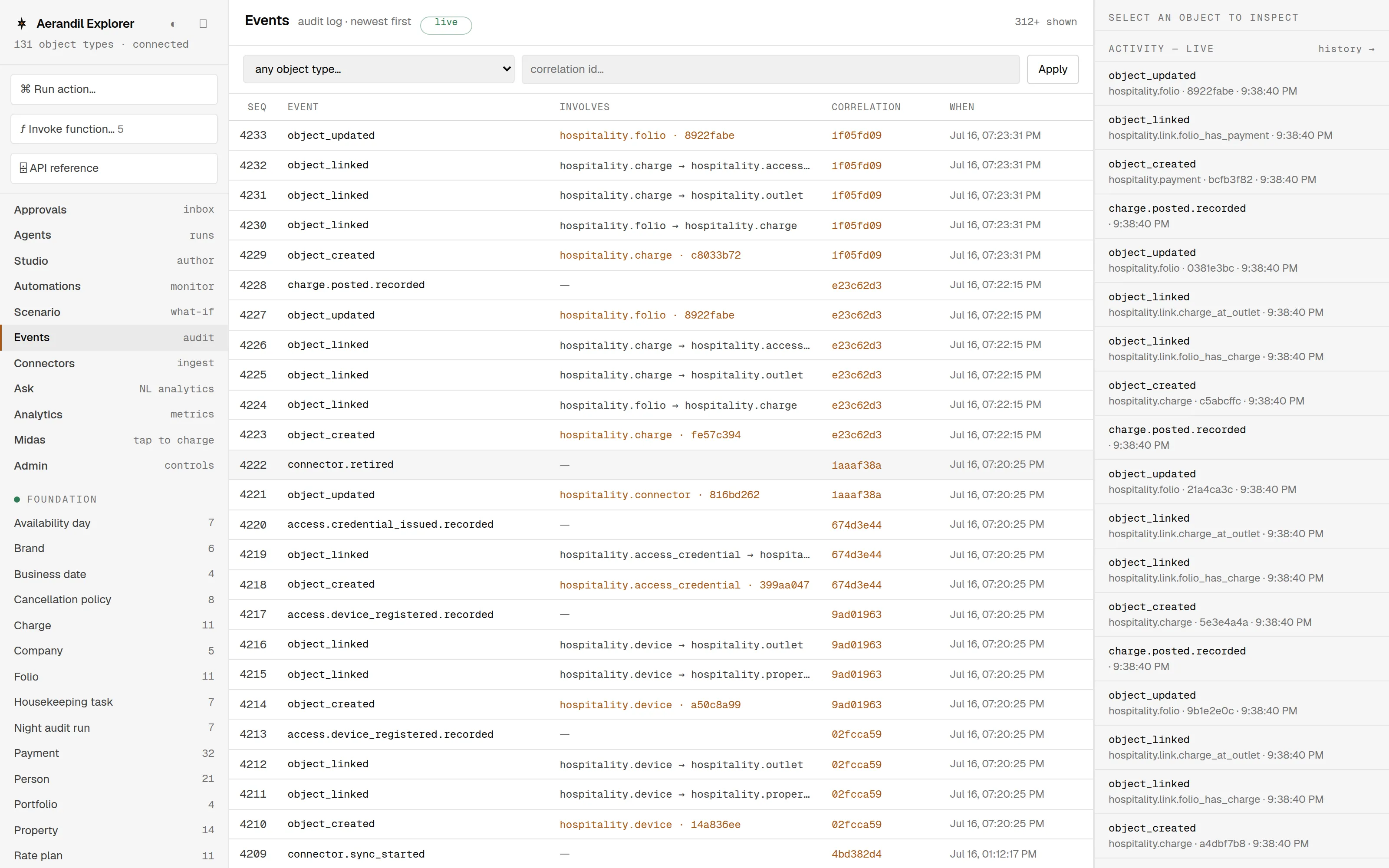
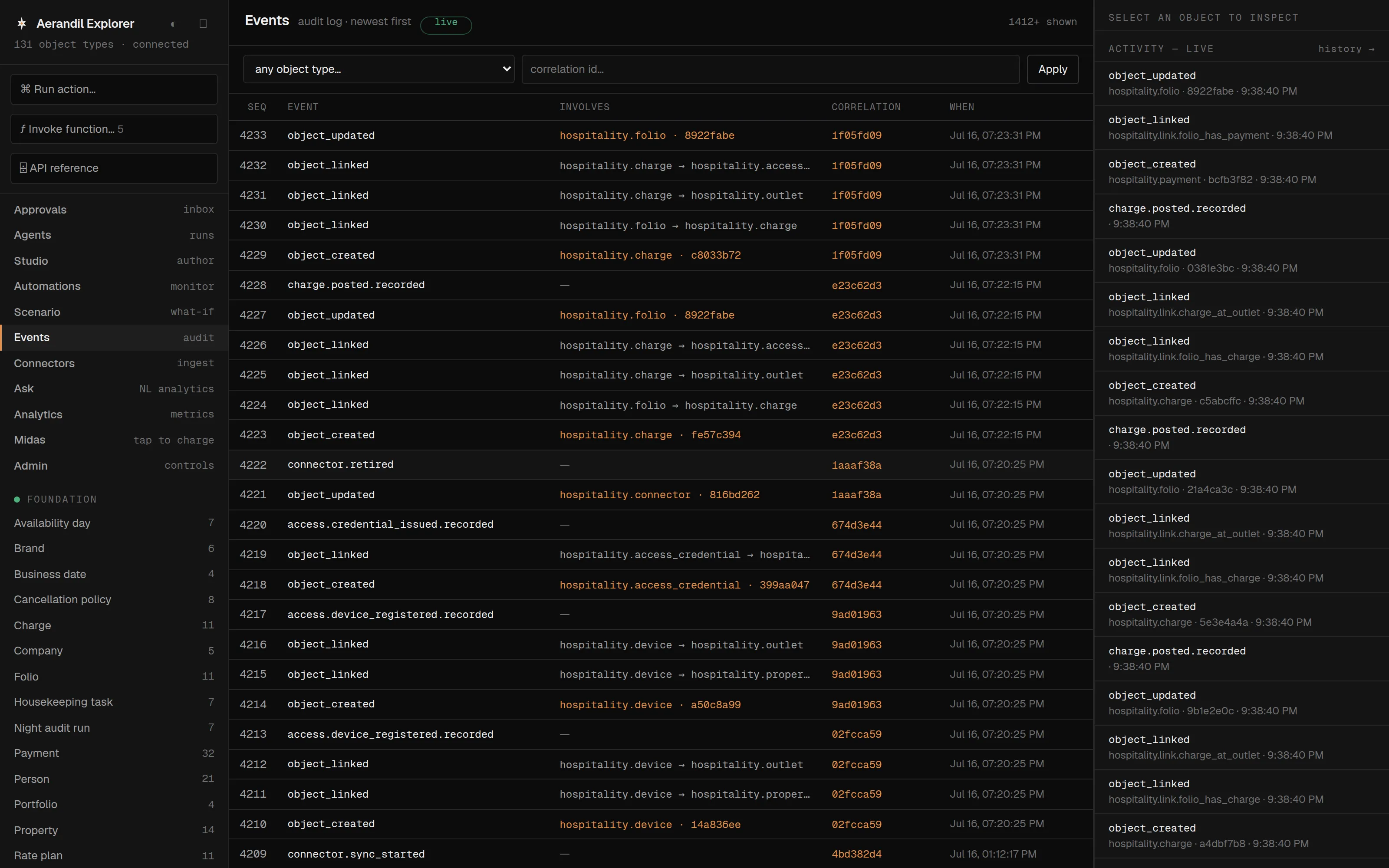
An immutable event log under every change. The audit trail is the architecture, not a feature bolted on.
What exists, who can touch it, and where every number came from: every object type, action and metric is discoverable and owned, each field carries its sensitivity marking, and a figure on a screen traces back to the events that produced it. It is what makes an agent's actions auditable.
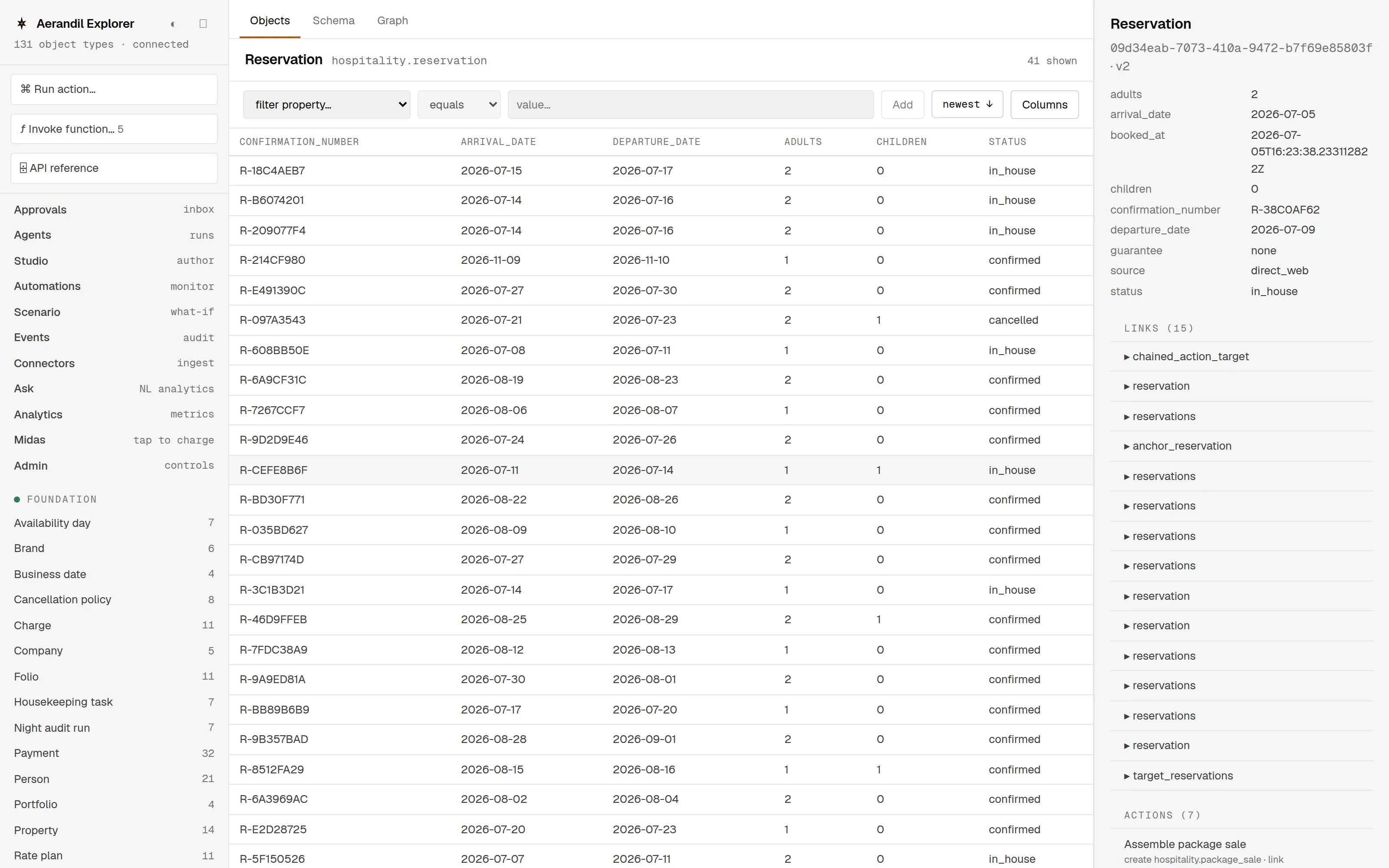
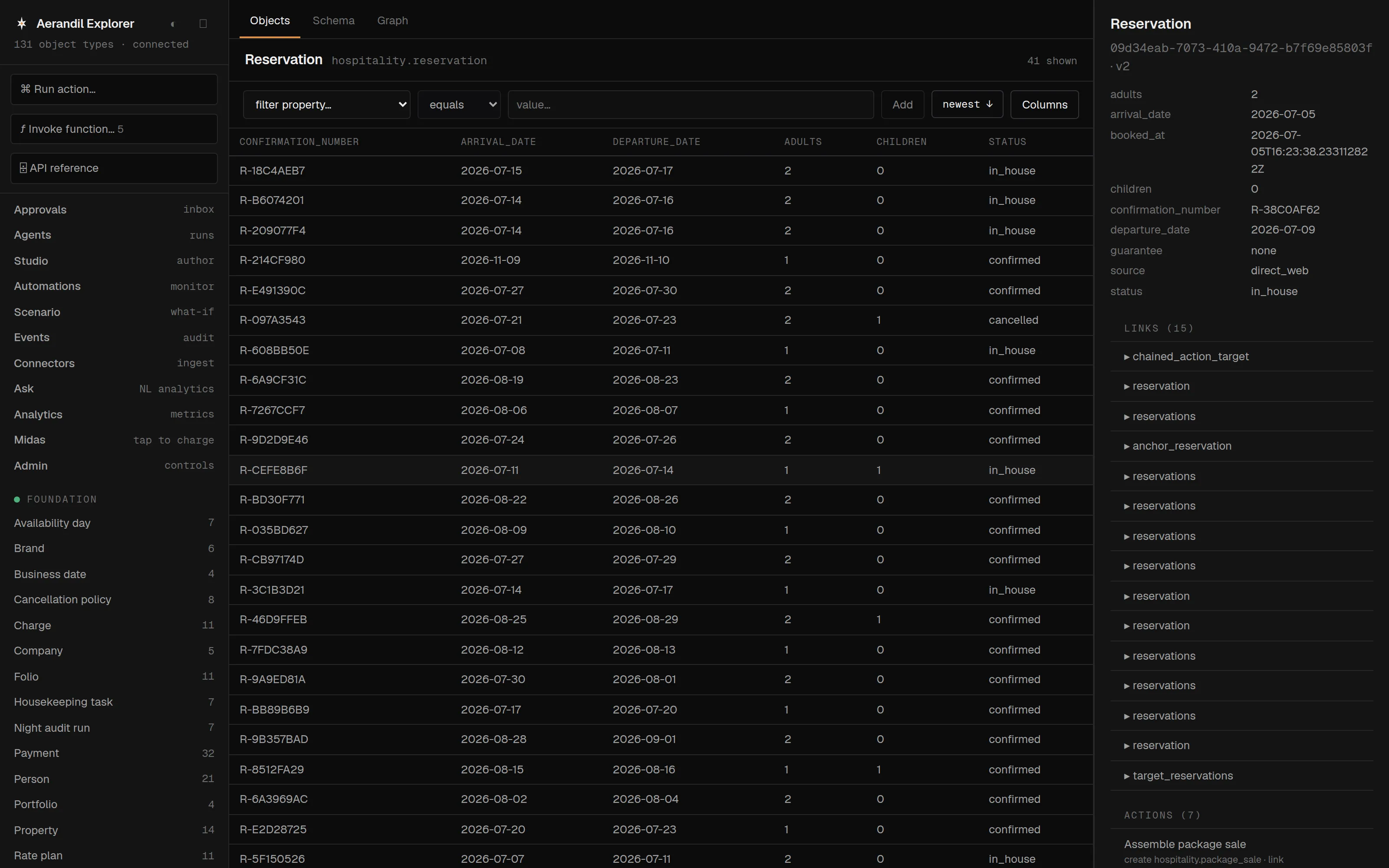
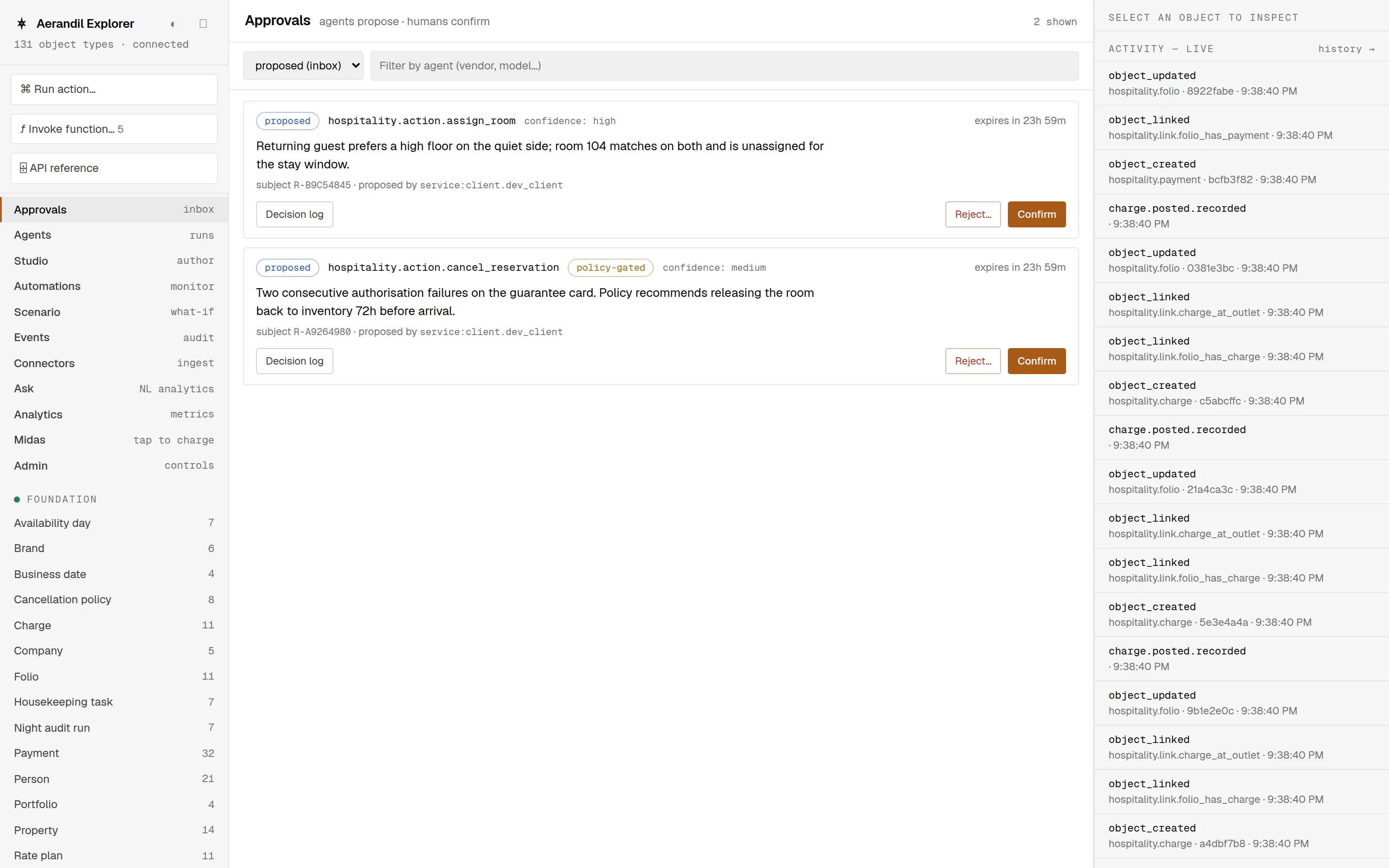
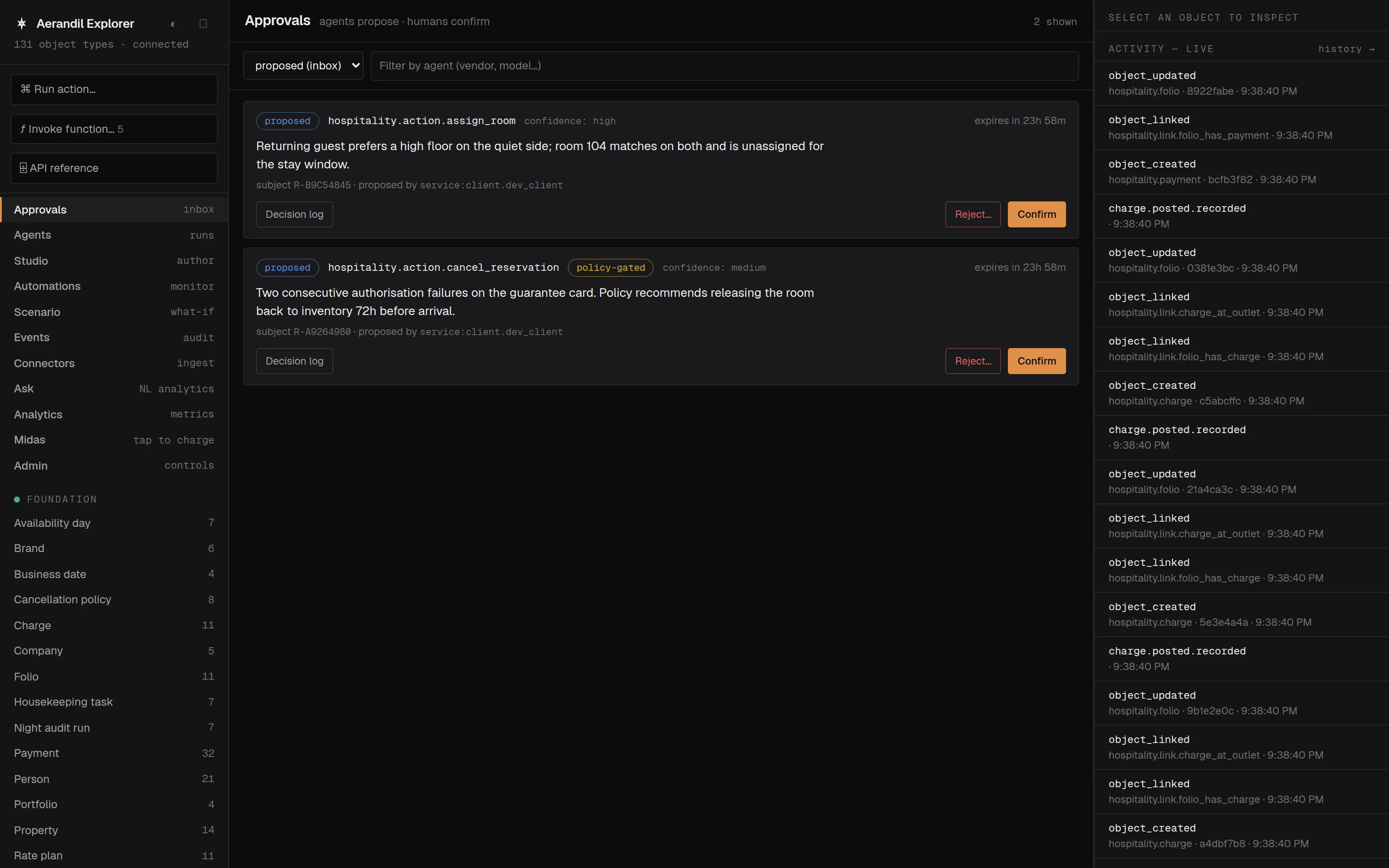
Explorer is Forge's operator console — generated from the same schema as the API, so it can never drift from it. Browse any object and its links, run any action through a generated form, watch the audit log live, and confirm what agents propose.
The dedicated cloud: your own single-tenant Forge cell — its own Postgres, region, and jurisdiction — with governed agents and open-weights models served inside the boundary.
AI products on the same public contracts as every partner — Forge Agents, the first-party runtime, and Talos, its flagship operations agent.
The flagship operations agent: a versioned definition, evals that gate release, and trust measured as conformed metrics.
The authoring plane for Forge Agents: compose an agent's tool and data boundary from the live ontology, test it in a no-write sandbox, publish an immutable version.
The PMS: purpose-built screens for arrivals, folios, night audit, housekeeping, and groups & events — running on the governed ontology.
The golden record: entity resolution that recognises the same guest, company, or property across every source system in the portfolio.
Embedded payments across every Aerandil product: the card rail, card on file, deposits and payment requests, no-show fees, refunds and disputes, each property's own merchant account, Charge to key — and Watchtower, the fraud network every hotel on the rail feeds.
Forward deployed
Aerandil is in private development. The next milestone is working with design partners who operate complex, multi-system hospitality businesses.
Design partner channel coming soon.